


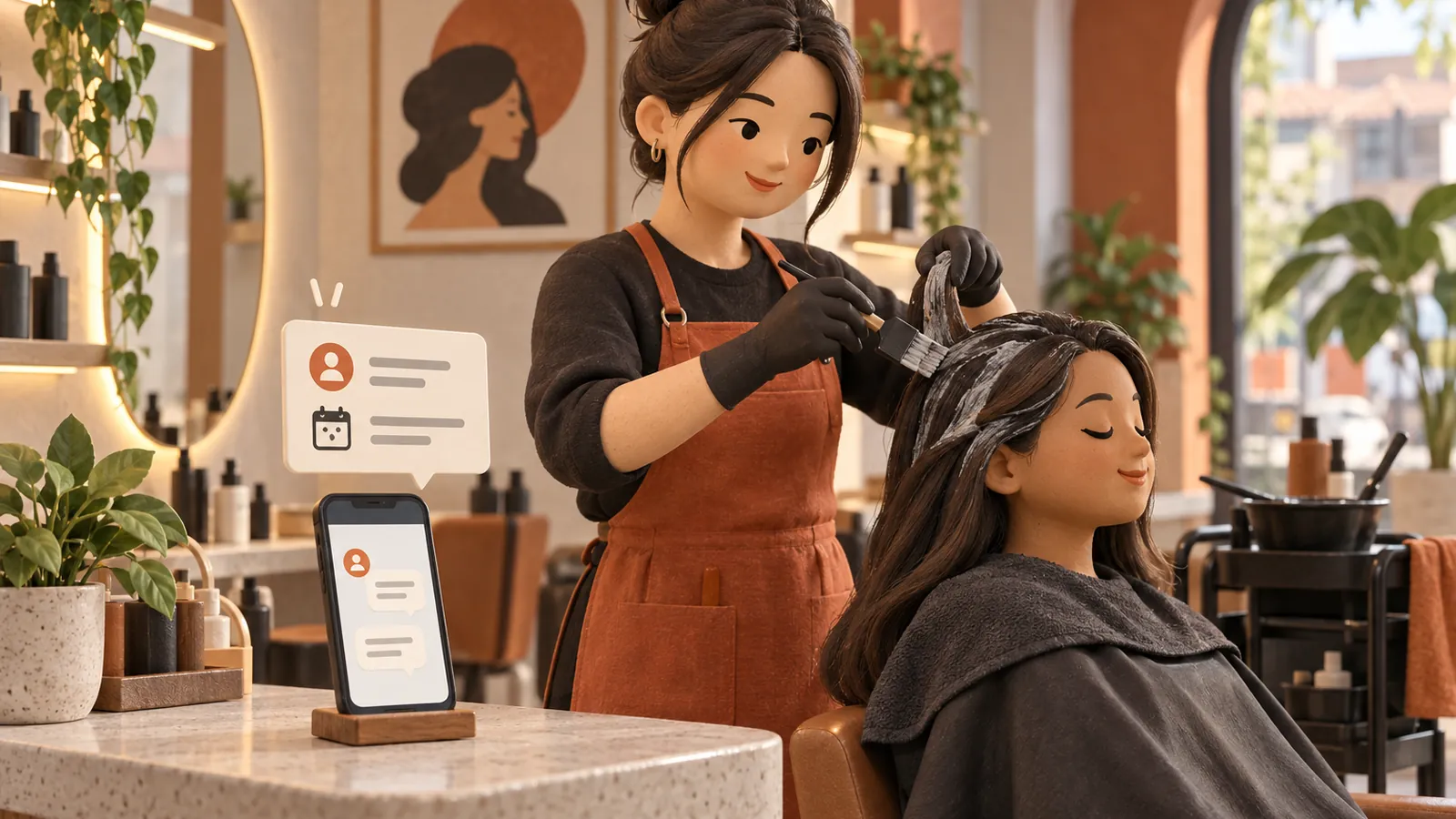
The messages arrive while your hands are busy.
In a salon, the person who answers WhatsApp is often the person holding the scissors or the facial tools. Customers ask short, practical questions: which services you offer, whether Saturday afternoon is free, what time you close, whether you open on a public holiday.
None of these are hard to answer. The problem is timing. You cannot stop mid-service to type, so the message waits until you are free.
What the AI can reply to first.
Claw Chat is our AI customer service. It replies on your WhatsApp with the answers you have approved, so the customer gets a reply while you carry on with the person in your chair.
- Your service list and a short description of each service.
- Opening hours, including days off.
- Your address and how to find you.
- How to ask for an appointment.
You decide what it says. If something is not in the approved information, it should say a team member will check, not guess.
Booking: it takes the request, you confirm the time.
The AI does not lock a slot in your calendar. Your appointment book stays with you. What it does is collect the booking wish and record it as a lead: who asked, which service, and which day or time they hope for. Staff see that note when they are free and confirm the time.
Here is an illustration. It is made up, not a real customer chat.
When you finish with your customer, you open one clear note instead of scrolling through a long chat.
When it should pass the chat to you.
Some questions need the owner or a senior stylist, not a first reply. Agree these handover moments in advance:
- A price for custom work, such as a colour that depends on hair length or condition.
- A question about whether a treatment suits someone’s skin, allergy or health condition.
- A complaint about a past visit.
- A change to an existing booking, or a special request.
- Anyone who asks to speak to a person.
The AI should not give medical advice or promise results. It records what the customer needs, tells them a person will follow up, and hands over.
What you get back: time and customers you would have missed.
You do not need every message answered by a person in the moment. You need each one answered, and the ones that matter passed to you with the details already written down.
- Time: repeated questions about hours, services and location are handled first by the AI, so you type less between customers.
- Fewer missed enquiries: messages that arrive during a busy session, in the evening or on a day off still get a reply and a recorded request.
- Better follow-up: every booking wish is written down with the customer’s name and service, so nothing depends on memory.
Start with one small set of questions.
You do not need to hand over everything. Write down the ten questions customers ask most, add a short approved answer to each, and decide which ones go straight to you. You tell us the questions and we set the reception up with you. Our guide on what to prepare before your AI assistant answers a customer walks through it, and how a good handover works shows what to pass on to your team.